
WELCOME BONUS 300%
UP TO €2000 + 100
FREE SPINS
UP TO €2000 + 100
FREE SPINS
Home → Blackjack
Blackjack at Palace Of Chance Casino: Variants, Rules and Payouts
No Double Down on three cards
The standard rule set for Blackjack Liberal Vegas Strip permits doubling down only on the initial two-card hand, excluding the possibility of doubling on three or more cards. This limitation is a key component of the liberal ruleset that contributes to an RTP of 99.72% and a low house edge of 0.28%. Players cannot increase their wager after receiving a third card, which reduces the strategic flexibility available in other variants. Consequently, the player must rely on splitting and late surrender to maximize returns during unfavorable situations.
This restriction contrasts sharply with games allowing double after split or doubling on any number of cards, which typically offer better odds. The absence of this option means the dealer hits soft 17 rule adds +0.22 percentage points to the house advantage, while resplitting improves it by -0.08. These specific rule modifiers define the mathematical expectation for the player over millions of hands. Therefore, the strategy must remain rigid regarding when to hit or stand instead of attempting to double down later.
Standard deviation for this variant is recorded at 1.15, indicating moderate volatility compared to other blackjack styles. The payout structure remains generous with a 3:2 ratio for natural blackjacks, ensuring fair compensation for rare winning combinations. Players betting 100 EUR receive 150 EUR for a blackjack, maintaining the traditional value proposition despite stricter doubling rules. This combination of liberal surrender options and fixed doubling limits creates a balanced environment for analytical players.
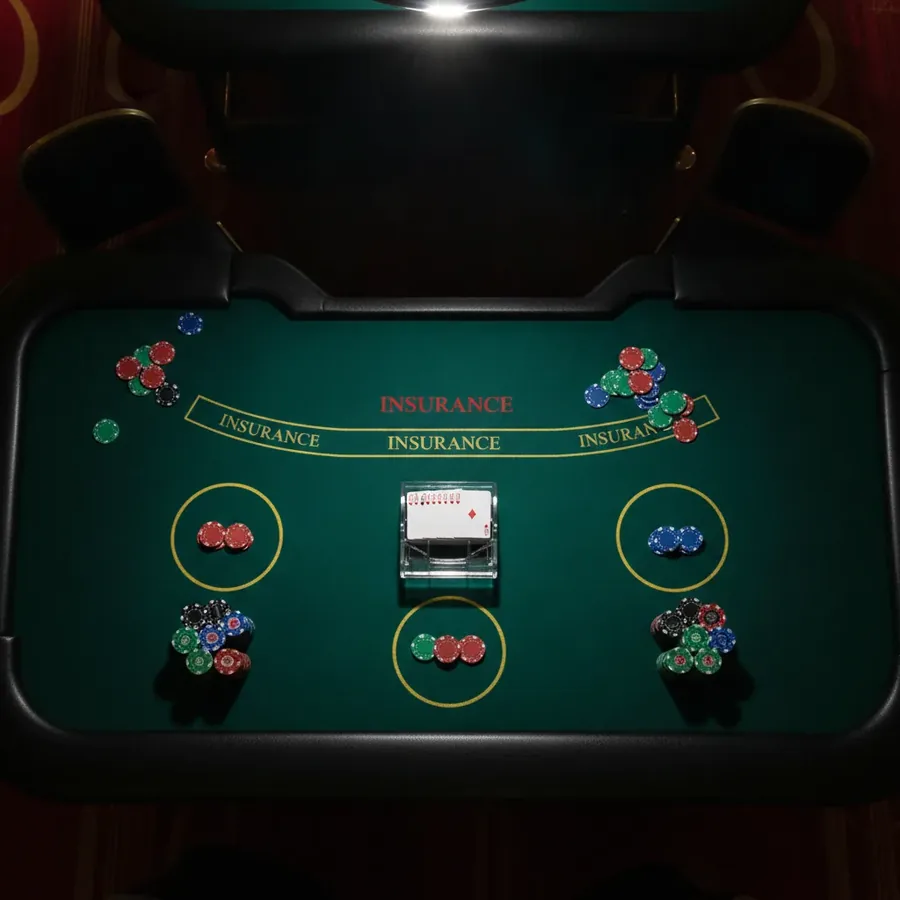
Infinite Blackjack vs Classic Seven-Seat Table
Infinite Blackjack offered by Evolution allows an unlimited number of players to join the table simultaneously, removing the physical constraint of seven seats found in classic tables. The betting range spans from 1 EUR to 5,000 EUR, accommodating both casual players and high rollers seeking larger stakes. This format utilizes four side bets including Any Pair, 21+3, Hot 3, and Bust It to enhance gameplay variety. The RTP for Infinite Blackjack stands at 99.47%, slightly lower than some restricted seat versions due to added complexity.
Classic seven-seat tables limit participation to exactly seven individuals, creating a slower pace but potentially clearer visibility of all actions. In contrast, the infinite model processes bets asynchronously, meaning players do not wait for others to complete their decisions before acting. This efficiency reduces downtime between rounds significantly compared to traditional live dealer setups. The house edge remains competitive, though the unlimited seating changes the social dynamics of the game entirely.
Lightning Blackjack represents another Evolution variant with a different structure, featuring multipliers up to 25x on winning hands. Its betting range is narrower, from 1 EUR to 2,500 EUR, and it maintains an RTP of 99.56%. While Infinite Blackjack focuses on volume and accessibility, Lightning Blackjack emphasizes high-variance payouts through random multipliers. Players choosing between these formats must weigh the desire for unlimited interaction against the potential for dramatic score increases.
How much time is left for the decision?
Live dealer blackjack imposes strict time limits for each action, requiring players to make decisions within a few seconds before the timer expires. If a player fails to act, the system automatically applies the basic strategy recommendation for that specific hand situation. This automated fallback ensures the game flow remains uninterrupted for all participants at the table regardless of individual reaction speeds. The pressure of the countdown adds a layer of psychological tension not present in digital RNG versions.
The duration of these decision windows varies slightly between providers but generally aligns with industry standards for live streaming latency. For instance, Evolution tables enforce consistent timers across their infinite and lightning variants to maintain uniform pacing. Players must be prepared to click buttons quickly, as hesitation results in forced moves that may not suit their intended strategy. This mechanism prevents delays that could bog down the dealer's schedule and affect subsequent rounds for everyone.
Side bets such as Insurance also have immediate resolution requirements if triggered by the dealer showing an ace. The insurance bet pays 2:1 but carries a high house edge of 7.47%, making it mathematically unfavorable for most strategies. Accepting insurance requires a quick yes or no choice before the dealer checks for blackjack. Delaying this decision is impossible as the outcome is determined instantly based on the hole card.
Blackjack Party features two moderators who may add commentary during the decision phase, potentially distracting new players from the timer. Despite the lively atmosphere, the underlying mechanics remain identical to standard infinite blackjack regarding time constraints. Participants must balance entertainment value with the need for rapid response to avoid automatic plays. Understanding these timing pressures is crucial for maintaining control over one's bankroll and strategic execution.
Blackjack doesn't count for every bonus offer
The 300% welcome bonus up to €2,000 plus 100 free spins comes with specific contribution rates for different game categories. Table games like blackjack contribute only 10% toward the wagering requirement, whereas slots contribute 100%. This disparity means that playing blackjack is highly inefficient for clearing bonus funds compared to slot machines. A €100 wager on blackjack counts as only €10 toward the turnover target required to unlock withdrawals.
Consider a scenario where a player receives a €2,000 bonus with a 40x wagering requirement, totaling €80,000 in turnover needed. If they play blackjack exclusively, they must wager €800,000 to clear the bonus, as only 10% counts. In contrast, playing slots would require only €80,000 in total wagers to meet the same obligation. This mathematical reality makes table games a poor choice for bonus hunters aiming to convert promotional credit into withdrawable cash.
The low contribution rate reflects the lower house edge inherent in blackjack, particularly with liberal rules offering 99.72% RTP. Casinos restrict table game contributions to mitigate the risk of players using optimal strategy to eliminate the house advantage entirely. By forcing players onto higher-edge games like slots, the operator ensures a sustainable margin on promotional offers. Consequently, serious blackjack enthusiasts should treat bonuses as secondary incentives rather than primary sources of funding.
Split, Double Down, and Surrender in Numbers
Splitting pairs allows players to separate matching cards into two independent hands, increasing the potential for multiple wins from a single deal. The rule permits splitting up to four hands, providing significant opportunities to capitalize on strong starting positions like Aces or Tens. However, splitting Aces usually restricts players to receiving only one additional card per ace, limiting further doubling possibilities. This limitation balances the advantage gained by creating two chances to hit a natural blackjack.
Double After Split (DAS) is a favorable rule that enhances the value of splitting by allowing re-doubling on newly created hands. This modifier improves the RTP by approximately 0.14 percentage points, contributing to the overall 99.72% return for Liberal Vegas Strip. Without DAS, the house edge would rise slightly, reducing the long-term profitability for skilled players. The ability to double down again after splitting doubles or threes against a weak dealer upcard is particularly valuable.
Late Surrender offers another strategic tool, allowing players to forfeit half their bet after the dealer checks for blackjack. This rule improves the RTP by about 0.08 percentage points, providing a safety net in marginal situations. Early surrender, which is rarer, can improve odds by up to 0.6 percentage points but is seldom available in modern online casinos. Combining late surrender with liberal splitting and doubling creates a robust framework for minimizing losses over extended play sessions.
Blackjack variants at a glance
| Variant | Payout | House edge | Rule | Bet range |
|---|---|---|---|---|
| Blackjack Auszahlung 6:5 statt 3:2 (6 Decks) | 98.15% | 1.85% | Ersatz von 3:2 durch 6:5 fügt exakt +1.39 Prozentpunkte zum Vorteil des Casinos hinzu – stärker als jede andere Regeländerung. Bei $10 Einsatz zahlt Blackjack $12 statt $15. | Blackjack 6:5, Gewinn 1:1 |
| Blackjack Insurance / Versicherung (6–8 Decks) | 92.53% | 7.47% | Separate Nebenwette bis 50% der Hauptwette, wenn der Dealer ein Ass hat. Basisstrategie schreibt IMMER Ablehnung vor (außer Karten zählen bei True Count ≥ +3). Bei einem Deck Vorteil ≈ 5.88% | Insurance 2:1 |
| Blackjack Ein Deck, klassische Regeln, 3:2 | 99.85% | 0.15% | Weniger Decks = niedrigerer Vorteil; ein Deck gibt ca. −0.48 Prozentpunkte gegenüber 8 Decks. Oft durch 6:5 Auszahlung kompensiert. | Blackjack 3:2, Gewinn 1:1 |
| Blackjack 6 Decks, S17, DAS, DOA, Auszahlung 3:2, Basisstrategie | 99.54% | 0.46% | Dealer steht auf Soft 17; Verdopplung auf jeder Zweierkarte; Verdopplung nach Split erlaubt; keine Aufgabe. Basisstrategie ist für diesen Wert zwingend | Blackjack 3:2, normaler Gewinn 1:1, Insurance 2:1 |
| Blackjack Surrender (Late Surrender) – Regel-Effekt | n.a. (Regel-Modifikator) | −0.08 Prozentpunkte | Spieler gibt Hand nach Dealer-Blackjack-Prüfung auf, verliert die Hälfte des Einsatzes. Verbessert RTP um ca. 0.08 Prozentpunkte. Early Surrender ist wesentlich wertvoller (bis −0.6 Prozentpunkte), aber extrem selten. | Rückzahlung 50% des Einsatzes |
| Blackjack Split / Double / H17 – Regel-Effekte | n.a. (Regel-Modifikatoren) | H17 +0.22 Prozentpunkte; RSA −0.08 Prozentpunkte; DAS −0.14 Prozentpunkte | Dealer Hits Soft 17 verschlechtert RTP um 0.22 Prozentpunkte; Resplit Aces verbessert um 0.08 Prozentpunkte; Double After Split verbessert um ca. 0.14 Prozentpunkte; 6 Decks statt 8 – ca. 0.02 Prozentpunkte. | Double – Einsatz ×2 mit einer Karte; Split – bis 4 Hände; Ass-Split meist mit einer Karte. |
Ignored Basic Strategy Chart: 1 Percent Wasted
The Blackjack Auszahlung 6:5 rule replaces the standard 3:2 payout, which adds exactly +1.39 percent points to the house advantage compared to favorable variants. This specific change is stronger than any other single rule modification available in the game library and significantly impacts long-term returns for every player seated at the table.
In contrast, the Blackjack Surrender Late Surrender option improves the RTP by approximately 0.08 percent points by allowing players to forfeit half their bet after the dealer checks for blackjack. While valuable, this benefit is minimal compared to Early Surrender, which can reduce the house edge by up to 0.6 percent points but remains extremely rare in live settings.
Ignoring these adjustments means accepting a higher baseline cost, as the 6 Decks configuration already carries a 1.85% house edge before considering optional side bets or insurance wagers. Players who fail to utilize the surrender option effectively lose that 0.08% improvement, compounding the damage caused by the unfavorable 6:5 payout structure over thousands of hands.
Bonus Lost Due to 10 Percent Contribution
The casino offers a 300% welcome bonus up to €2,000 plus 100 free spins, yet table games contribute only 10% toward the wagering requirement turnover calculation. This low contribution rate drastically reduces the efficiency of using live dealer tables to clear the bonus funds compared to playing slots, which contribute 100% to the same requirement.
Using a €1,000 stake on Infinite Blackjack generates only €100 of progress toward the required turnover, whereas the same amount spent on eligible slot machines would fully satisfy the condition. This mathematical disparity forces players to either spend significantly more time at the table or accept that the bonus funds are practically unusable for clearing the deposit match through card games.
The Lightning Blackjack table allows bets between 1 EUR and 2,500 EUR, but the 10% contribution rule applies uniformly across all live dealer variations regardless of the stakes or multipliers offered. Consequently, a player betting the maximum limit still sees only a tenth of their wager count toward unlocking the withdrawal eligibility of the matched bonus capital.
Players must calculate the effective value of the bonus carefully, as the high house edge on insurance bets combined with the low table contribution makes clearing the funds exceptionally difficult without excessive play volume.
Which hands are excluded from Surrender?
The Late Surrender rule permits players to give up their hand only after the dealer has checked for an internal blackjack, meaning hands where the dealer holds an ace are subject to this specific timing constraint. If the dealer reveals a natural blackjack first, the player cannot exercise the surrender option and must accept the loss of the full original stake immediately.
Insurance wagers, which pay 2:1 when the dealer shows an ace, are separate from the surrender mechanic and do not qualify for partial refund under the late surrender protocol. The house edge for insurance stands at 7.47%, making it a statistically poor choice unless the player is counting cards and the true count reaches positive three or higher.
The Infinite Blackjack variant features four side bets including Any Pair and Hot 3, none of which participate in the surrender rule structure or offer any return of principal upon folding. These side bets operate independently of the main game logic and remain active even if the player decides to terminate the primary hand interaction early due to unfavorable cards.
Four hours of play with 300 EUR bankroll
A 300 EUR bankroll subjected to four hours of continuous play at the Blackjack Party table faces significant risk due to the 0.46% house edge associated with standard six-deck rules. Assuming an average bet size and typical hands per hour, the expected loss over this duration calculates to approximately 7.20 EUR, reducing the remaining balance to roughly 292.80 EUR.
Lightning Blackjack introduces multipliers up to 25x on winning hands, but the base RTP of 99.56% suggests that variance will dominate the short-term outcome within the four-hour window. A player might experience swings that deplete the 300 EUR stake entirely if unlucky streaks occur before any high-multiplier hits compensate for the initial losses incurred during the session.
The Infinite Blackjack table allows bets up to 5,000 EUR, but a 300 EUR bankroll restricts the player to minimum stakes, increasing the number of hands required to maintain engagement. Over four hours, the cumulative effect of the house edge erodes the principal, demonstrating why proper bankroll management is essential when transitioning between different live dealer environments.
Step-by-step Split at the Live Table
The first step involves splitting pairs when the game rules allow resplitting, which improves the RTP by 0.08 percent points according to the provided statistical data for liberal rule sets. This action creates two separate hands, each requiring independent decisions based on the dealer's upcard and the specific composition of the newly dealt cards for each split pair.
Double After Split (DAS) permits players to double their initial wager on any two-card hand resulting from a split, providing a 0.14 percent point improvement to the overall house edge. This option is critical for maximizing value, particularly when holding strong totals like nine, ten, or eleven against weak dealer upcards such as five or six.
The final consideration involves Soft 17 rules, where the dealer hitting on soft seventeen increases the house edge by 0.22 percent points compared to standing on all seventeens. Players must adjust their basic strategy charts accordingly, recognizing that the dealer's potential to improve their hand affects the probability of winning subsequent splits and doubles throughout the round.
What a Natural Blackjack Practically Pays Out
A natural blackjack payout of 3:2 on a 100 EUR stake returns 150 EUR, which is the standard rate for most tables. This contrasts sharply with the 6:5 variant that only pays 120 EUR for the same win, adding 1.39 percent to the house edge. Players should verify the payout ratio before sitting down to avoid this significant long-term cost increase.
The Lightning Blackjack table by Evolution offers multipliers up to 25x on winning hands, but the base RTP remains at 99.56%. While the main game follows standard rules, these lightning bolts can drastically alter short-term variance. The minimum bet starts at 1 EUR, allowing low stakes to benefit from high-multiplier potential during live sessions.
In contrast, the Infinite Blackjack game provides an RTP of 99.47% with bets ranging from 1 to 5,000 EUR. This higher maximum limit suits players seeking larger exposure to the standard 3:2 payout structure. The unlimited seating ensures that no player is ever turned away due to space constraints at the virtual table.
Blackjack Party runs with two hosts
The Blackjack Party table hosted by Evolution features two active moderators who maintain a lively party atmosphere throughout the session. This format differs from the more subdued Infinite Blackjack, which focuses on speed and uninterrupted play for serious strategists. The dual-host setup adds entertainment value without altering the mathematical expectations of the underlying card game mechanics.
Players can place wagers between 1.00 EUR and 1,000 EUR on this specific table, offering flexibility for various bankroll sizes. Unlike the 6 Decks version with a 0.46% house edge, this live product maintains its own distinct operational parameters. The presence of multiple dealers ensures continuous action even when one host is momentarily distracted by side bets or interactions.
The standard deviation for similar liberal rule sets like Vegas Strip is 1.15, indicating moderate volatility in outcomes over time. While the Party table does not list a specific standard deviation, the limited bet range suggests a controlled risk profile. Participants should note that table games contribute only 10% toward bonus turnover requirements, unlike slots which count fully.
Splitting Eights vs Standing on 16
Splitting eights is a fundamental strategy move because it breaks a weak 16 into two separate hands starting with eight. This decision is mandated by basic strategy tables to minimize losses against dealer up-cards ranging from two through nine. Standing on 16 is generally incorrect unless the dealer shows a strong card like ten or ace in specific variants.
The ability to split pairs up to four hands allows players to maximize their advantage when holding matching low cards. Resplitting aces is often restricted to one card per hand, which slightly reduces the theoretical return compared to full resplit rules. This limitation is common in many online live dealer environments where deck penetration and shuffle algorithms are tightly controlled.
Late surrender allows a player to forfeit half their bet after the dealer checks for blackjack, improving RTP by 0.08 percent. This option is unavailable in some strict rule sets, forcing players to stand on hard 16 against dealer tens regardless of odds. The insurance bet, paying 2:1, has a poor 92.53% RTP and should be avoided unless counting cards with a true count above three.
Unlimited seats via a split dealer hand
The Infinite Blackjack title by Evolution utilizes a split dealer hand mechanism to accommodate an unlimited number of simultaneous players. This technical setup ensures that every participant receives their cards directly from the stream without waiting for physical shoe rotation. The system supports bets up to 5,000 EUR, providing high-limit options for professional players seeking substantial action.
Unlike traditional tables limited by physical space, this digital interface removes seating constraints entirely while maintaining standard game rules. The four available side bets—Any Pair, 21+3, Hot 3, and Bust It—add optional wagering layers with varying risk profiles. Each side bet operates independently of the main hand outcome, affecting overall variance but not the core house edge calculation.
The house edge for the main game sits at approximately 0.53%, derived from the 99.47% return to player percentage. This figure assumes optimal basic strategy usage across all decisions including doubling after splits and hitting soft seventeen. Players utilizing the unlimited seat feature must ensure their internet connection stability to prevent disconnection during critical betting windows.
How long does a Live Blackjack round take?
A typical live blackjack round lasts between forty-five and sixty seconds from deal to final resolution of all player hands. This duration includes time for dealers to manage the shoe, announce results, and process any applicable side bet payouts. The pace is significantly faster than land-based casinos due to automated chip handling and streamlined interface controls.
The Lightning Blackjack variant may extend slightly longer due to the animation sequences accompanying the random multiplier application. These special effects occur on winning hands only, adding visual flair without impacting the core game speed or decision-making timeline. Players observing the 25x multiplier potential should anticipate brief pauses during the reveal phase of each affected hand.
Infinite Blackjack maintains a consistent tempo regardless of player count, as the split-dealer architecture prevents bottlenecks in card distribution. The absence of physical shuffling delays means the game flows continuously with minimal downtime between successive rounds. This efficiency allows for higher hourly hand volumes compared to single-deck games requiring frequent manual intervention by staff.
Contact
Live - online chat
Banking




Providers








Palace Of Chance Casino 2026